
FAQ
Frequently Asked Questions
Common questions about varicose veins, spider veins, insurance, financing, treatment, and prevention at The Vein Care Center.
Financing
Insurance and payment
What is your financial policy?
On the day of your initial consultation, a treatment plan will be designed specifically for you. Should the treatment plan be considered “medically necessary,” The Vein Care Center will submit a pre-determination letter along with your medical records to your insurance carrier for prior authorization. Should you decide not to wait for the pre-determination process and would like to proceed with the treatment plan prescribed, you will be responsible for payment at the time of service.
The Vein Care Center has extensive knowledge and experience with all medical insurance companies, and will work with you to personalize your needs. The Vein Care Center works with major insurers, such as Aetna, Blue Cross and Blue Shield of Illinois, Cigna, Humana, Medicare (Part B), and UnitedHealthcare.
The Vein Care Center accepts all major credit cards and checks. There is also convenient healthcare financing available.
Are treatments covered by insurance?
As you schedule your initial appointment with The Vein Care Center, a determination of coverage is made at that time. For vein related visits, the initial office consultation and venous ultrasound are usually covered by most insurance carriers. Consultations for cosmetic vein treatment are complimentary.
Treatment and prevention
What are varicose and spider veins?
Varicose veins are the large ropey veins seen in the leg. The word “varicose” refers to a vein that is enlarged and permanently distended. Vein walls or vein valves can be damaged or stretched and weakened by high pressure in these veins.
As blood is pumped back to the heart, veins act as one-way valves to prevent the blood from flowing backwards. If the one-way valve becomes weak, some of the blood can leak back into the vein, collect there, and then become congested or clogged. This congestion will cause the vein to abnormally enlarge.
Spider veins (telangiectasias) are the smaller, less pronounced variants of varicose veins. They can look like a tree branch or spider web with their short jagged lines. Spider veins typically do not pose serious threats, but nonetheless can be unsightly, cause discomfort, and carry with them numerous cosmetic considerations. Spider veins can be found on both the legs and the face.
How uncommon are abnormal leg veins?
Vein disorders are among the most common and most treatable problems in medicine today. As many as 60% of all American women and men suffer from some form of vein disorder, but women are more affected. It is also estimated that 41% of all women will suffer from abnormal leg veins by the time they are in their 50s.
What causes varicose and spider veins?
No one knows the exact cause of spider and varicose veins, but there are several factors that cause a person to be more likely to develop them. Hereditary, or being born with weak vein valves, may play a role. Hormones also play a role. The hormonal changes that occur during puberty, pregnancy, and menopause, as well as taking estrogen, progesterone, and birth control pills can cause a woman to develop varicose veins or spider veins.
During pregnancy, besides the increases in hormone levels, there also is a great increase in the volume of blood in the body that can cause veins to enlarge. The enlarged uterus also puts more pressure on the veins. Within three months after delivery, varicose veins usually improve. However, more abnormal veins are likely to develop and remain after additional pregnancies.
Other factors that weaken vein valves and that may cause varicose or spider veins include aging, obesity, leg injury, and prolonged standing, such as for long hours on the job. Spider veins on the cheeks or nose of a fair-skinned person may occur from sun exposure.
Why treat varicose veins and spider veins?
Some people desire treatment for cosmetic reasons only and others for the medical benefits it will provide to the legs. Typically, symptoms from varicose veins are heavy, achy, drawing pains, swelling (edema), tenderness to touch, and a tired feeling in the legs.
Untreated, varicose veins and spider veins may lead to other medical problems. As they enlarge they can cause worsening venous insufficiency, which is a congestion of the venous blood that is unable to return from the legs to the heart. Venous insufficiency itself leads to other problems, such as blood clots (thrombosis), vein inflammation (phlebitis), leg ulcers (breaks in the skin), bleeding, infection, and stasis (skin) changes in the legs.
How are varicose and spider veins treated?
There are many types of treatments available to help patients with both varicose veins and spider veins, from support stockings and laser therapy to sclerotherapy and micro-phlebectomy.
Explore our vein care services to find the best option for you.
Can varicose and spider veins return even after treatment?
Current treatments for varicose veins and spider veins have very high success rates. However, new varicosities may occur over time. Because of this it is important to follow your doctor’s recommendations including the use of support hose and exercise. Regular follow-up visits along with an ultrasound, when indicated, are recommended.
How does therapy help?
The treatment and elimination of varicose and spider veins allows the venous side of the circulatory system to be improved. By eliminating these veins, the blood is forced into other better functioning blood vessels to be returned to the heart. The blood that was pooled in the varicose and spider veins is no longer stationary and stagnant as the veins have been sealed shut and removed from the circulatory system.
After the veins have been eliminated, patients whose symptoms were related to the venous congestion and insufficiency often experience relief. This is because without stagnant blood and swelling in the varicose and spider veins, your discomfort should improve.
Can varicose and spider veins be prevented?
There are several things you can do to help prevent varicose and spider veins and to relieve discomfort from the ones you have:
- Exercise regularly to improve your leg strength, circulation, and vein strength. Focus on exercises that work your legs, such as walking or running.
- Control your weight to avoid placing too much pressure on your legs.
- Do not cross your legs when sitting. However, try to elevate your legs when resting.
- Do not stand for long periods of time. If you have to stand for long periods of time, shift your weight from one leg to the other every few minutes.
- If you have to sit for long periods of time, stand up and move around or take a short walk approximately every 30 minutes.
- Wear elastic support stockings, but avoid clothing that is too tight or that will constrict your waist, groin, or legs.
- Make sure to include high-fiber foods in your diet since constipation can contribute to varicose veins. High-fiber foods include fresh fruits and vegetables and whole grains, like bran.
- Control your salt intake. Salt, or sodium, can cause you to retain excess water.
Are there any medications available to treat varicose veins?
Unfortunately, varicose veins are more of a “mechanical” problem and there are currently no effective medications available.
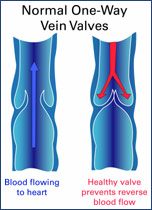
Normal one-way vein valves allow blood to flow toward the heart and prevent reverse flow.
Still have questions?
Reach out or book a consultation. We’re happy to help.